Bhutan Trip plan

N/A

Book This Tour

Overview

Your Tour Itinerary

Arrive Paro – Thimphu

Arrive Paro – Thimphu

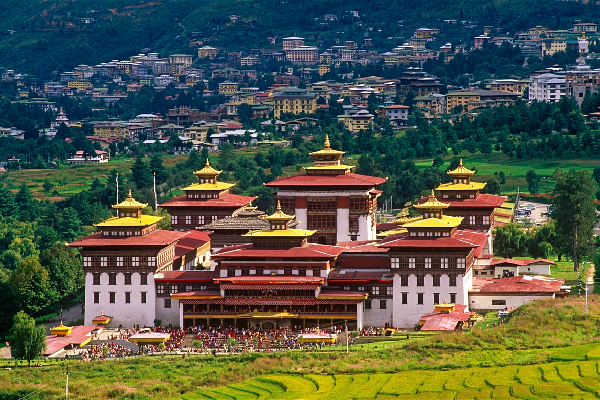
• After arriving & visa formalities and collection of baggage, you will be welcomed by our tour representative who will be your tour guide during your entire trip in Bhutan. • Check into your hotel in Thimphu. Free until lunch time for some rest from early morning flight, refreshment and lunch. • Afternoon, you can choose to visit any or all of the following places:- Tachogang Lhakhang Tachogang Lhakhang is located in Paro district, on the way to Thimphu. It was founded by Thankthong Gyelpo after he experienced a vision of Guru Rimpochhe, Amitaba and Avalokiteshvara near site. The caretakers today are said to be descendants of Thangtong Gyelpo. Inside the temple one can see the master’s relics, including his walking stick. Tashichho Dzong The Tashichho Dzong is a Buddhist monastery cum fortress at the northern edge of Thimphu the capital city of Bhutan. The Dzong was built on the western bank of the river Wang Chu, and has historically served at the seat of the Druk Desi or the Dharma Raja of Bhutan’s government. After the kings assumed power in 1907 this post was combined with that of the king and Thimphu severed as the summer capital of the kingdom before becoming the full time capital of Bhutan.

Thimphu

Thimphu

Before breakfast we will have have yoga session and then we will have healthy breakfast after that we will visit following places: Kuensel Phodrang The Kuensel Phodrang or the Buddha point isthe world’s largest sitting Buddha statue, the statue is 167 feet high. The statue is situated on top of a hill overlooking the city of Timphu, it can be accessed by road and is about 15 minutes away from the city’s center. The word Kuensel means everything is clear and from this place you will sure enjoy a great view of the Thimphu Valley on both sides. The statute will house a temple inside it, the statue and its adjoining car park and recreational center. National Memorial Chorten The National Memorial was built by Bhutan's third king, H.M. Jigme Dorji Wangchuck who is also known as the "father of modern Bhutan." He wanted to erect a monument carrying the message of world peace and prosperity. Howeve​r, he was unable to give shape to his idea in his lifetime due to pressures of state and other regal responsibilities. After his untimely demise in 1972, the Royal Family and Cabinet resolved to fulfill his wishes and erect a memorial that would perpetuate his memory and also serve as a monument to eternal peace, harmony and tranquility. Motithang Takin Preserve The Motithang Takin Preserve also known as the Thimphu Zoo by many is a small natural preserve for the Takin Bhutan’s national animal. It was originally a mini zoo, but it was converted in a preserve later on as the Takin. The mini zoo contained a small number of Takin but the King of Bhutan later decreed that it was improper for a Buddhist nation to keep an animal in captivity. The animals were set free and the zoo was shut down, but for some reason the Takin refused to leave the area for the forests nearby. ZilukhaNunnary ThangthongDewachen Nunnery is a Buddhist monastery in the small Himalayan country of Bhutan. The nunnery is located in Zilukha, Thimphu overlooking Tashichodzong and is a few minutes’ drive from the town. It is popularly known as the ZilukhaAnimDratshang. It was built in 1976 by the 16th emanation of ThangtongGyalpo, DrubthobRikeyJadrel. Currently, the nunnery is home to about 60 nuns. We will return to hotel and then we will continue with our yoga

Thimphu – Punakha

Thimphu – Punakha

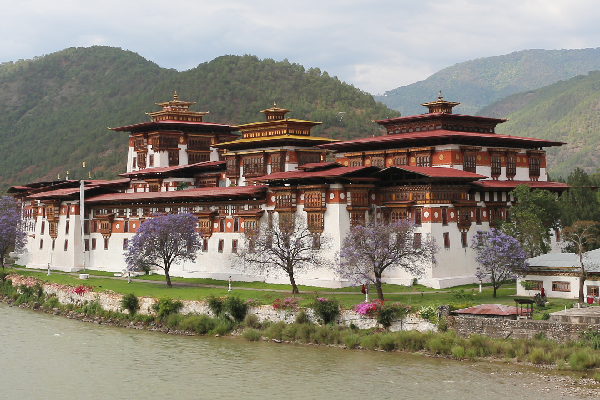
We would star with the yoga in the hotel Post early breakfast, you will drive towards Punakha via Dochula Pass. If you are interested then we will meditate in the above dochulla.We will stop over for tea at Dochula (3,100 m), where on a sunny day, you can get stunning views of the Himalayan ranges. The Dochu La Pass is probably the best known mountain pass in Bhutan. Located at an altitude of 3150 meter above sea level, the Dochu La Pass is about 30 kilometer away from the capital city Thimphu and the road to Punakha.On a clear day the pass offers visitors a spectacular view of the majestic eastern Himalayan Ranges. Punakha Dzong The Punakha Dzong or the Pungtang Dechen Phortang Dzong is located at the confluence of the Mo Chhu and the Po Chhu River, combine to form the Puna Tsang Chu which in turn is a tributary of the mighty Brahmaputra River. The Dzhong was constructed by Zhabdrung Ngawang Namgyal Wangchuck in 1638 on the exact spot as prophesized by the Guru Rinpoche some 800 years ago. According to the prophecy of Guru Rinpoche “a person named Namgyal will arrive at a hill that looks like an elephant”. And lo behold! Zhabdrung Ngawang Namgyal found that the peak of the hill was in the shape of an elephant’s trunk and built the Dzong at that very spot. Check in the hotel and then do our yoga session Overnight at Hotel

 Punakha

Punakha

As usual we will star our day with yoga. We will drive to Chimmi Lhakhang to start with. The Chimi Lhakang or the Chimel Lhakang is a Bhuddhist monastery located in the Punakha District of Bhutan. The monastery stands on a small hill close to the village of Lobesa and was constructed in 1499 by Ngawang Choegyel, the 14thDrukpaheirarch. Khamsum Yulley Namgyal Chorten A beautiful hike takes one to the regal Khamsum Yuelley Namgel Chorten, which was built to remove negative forces and promote peace, stability and harmony in the changing world. The Chorten dominates the upper Punakha Valley with commanding views across the Mo Chhu and up towards the mountainous peaks of Gasa and beyond. Sangchhen Dorji Lhuendrup Lhakhang Nunnery Perched on a ridge amid pine trees and overlooking valleys of Punakha and Wangduephodrang, gleams the magnificent structures of Sangchhen Dorji Lhuendrup Lhakhang(Temple). The temple houses a 14-foot main bronze statue of Avalokiteshvara (Chenrigzig chagtong chentong). Other statues include those of Guru Padmasambawa, Gautama Buddha, Zhabdrung Ngawang Namgyel, Tsela Namsum, the 21 Taras and Tsepamay (Buddha of longevity). The Avalokiteshvara statue, one of the biggest in the country, was the handiwork of entirely local Bhutanese artisans. The temple complex also houses a permanent higher learning and meditation centre for nuns where, apart from religious trainings, it provides life skill training such as tailoring, embroidery, statue making and thangka painting. We would take time and have session with nuns.

Punakha- Gangtey

Punakha- Gangtey

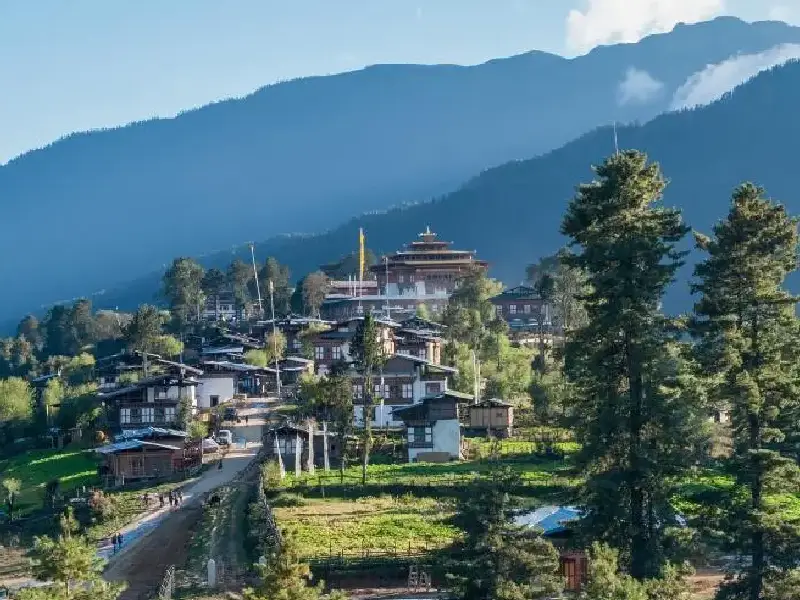
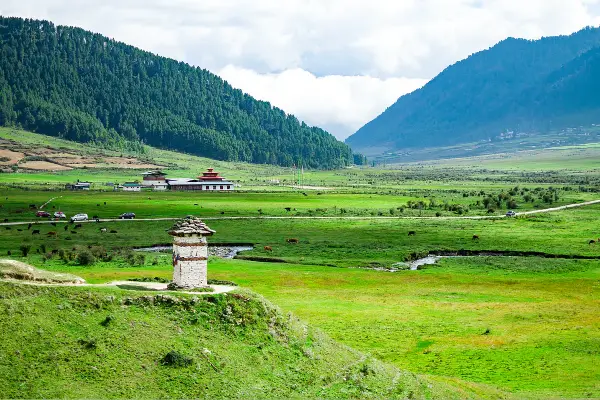
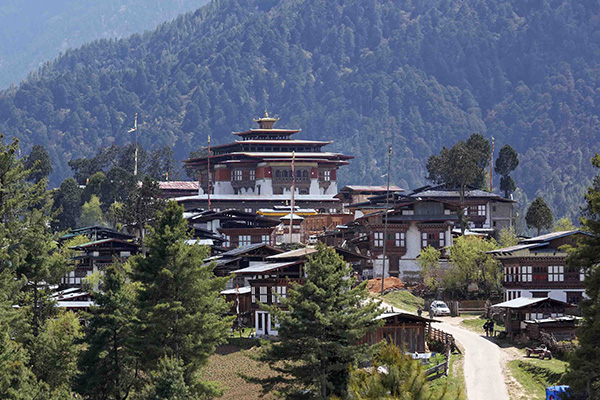
After yoga we will start our journey toward Gangtey/Phobjikha valley .When you reach Phobjikha valley you will visit Gangtey Gonpa/Phobjikha Valley. This valley is a broad glacial valley (10’000 ft) on the flanks of the Black Mountains, Phobjikha with it’s gently slope is a place of astonishing beauty described as” the most beautiful valley in the most beautiful country of Himalayas”. Every winter, the rare and beautiful black-necked cranes return from Tibet to the Gangtey valley where they are protected. Gangtey also has a very interesting and ancient Nyingmapa monastery, the only one of its kind west of the Black Mountain range. Visit Gangtey Gompa Monastery( more than 450 years old). Gyaltse Pema Thinley, the grandson and mind reincarnation of Pema Lingpa founded the Temple in 1613, and Tenzin Legpai Dhendup, the second re-incarnation, built the temple. Overnight in Gangtey-Phobjikha Valley

Gangtey- Phobjikha Valley

Gangtey- Phobjikha Valley

Early morning, 6:AM gather in the monastery’s main temple for the special Lhabsang Thruesel ceremony (long life and purification ceremony ).This Puja is a ceremony to celebrate new beginnings and special occasions with monks performing a 1 hr ritual ceremony & blessing. After breakfast, introductory teaching by Khenpo and Sand Mandala building begins.The Tibetan mandala is a tool for gaining wisdom and compassion The Tibetan mandala is a Lunch at 12 PM and afternoon at your own. At 4 PM, meet your yoga& meditation master for introduction session and briefing of your retreat in the yoga and Meditation room followed by welcome dinner at 6.30 PM. Overnight in Gangtey Valley

Gangtey- Haa

Gangtey- Haa

After breakfast drive back to Haa. Simtokha Dzong The Simtokha Dzong is a small Dzong located approximately 5 kilometers south of Thimphu. The Dzong is officially called the SangakZabhonPhodrang which roughly translates to the Palace of the Profound Meaning of Secret Mantras. The SimthokaDzong is said to be the first fortress to have been built by the legendary ShabdrungNgawangNamgyal in Bhutan Over night at Haa

 Haa

Haa

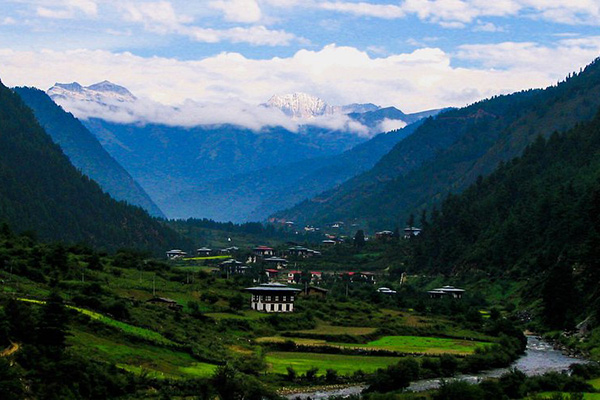
Enjoy a full day of exploration in this culturally rich valley, which is also known for being the ancestral home of the Royal grandmother. The two most important temples here are the 7th century Lhakhang Karpo (White temple) and Lhakhang Nagpo (Black temple), which sit at the foothills of a group of hills known as Meri Puensum. Legend has it that King Songtsen Gampo released a black and a white pigeon to select sites to build the temples, which act as guardian sentinels keeping watch over the southern entrance to the valley. Travel back towards the Cheli La Pass, which is decorated with thousands of prayer flags, and have a picnic lunch in the surrounding pine tress. As you climb the hill towards the north of the pass – out of blue pine and rhododendron forest into windswept highlands – the mountain tops will appear one by one, revealing Himalayan peaks such as the Jhomolhari (7,314m), Jichu Drake (6,794m) and world’s third highest mountain Kangchenjunga (8,586m) located in Sikkim. A variety of birds can be also be seen and heard in the mountain landscape. You will then take a 45-minute hike through primeval forest from the road to Kila Goemba, one of the oldest Nunneries in Bhutan. The building almost to seems to suspend in mid air from the rock face, and it’s home to around 60 hardy nuns. If there’s time, perhaps practice some meditation in this place that’s been a spiritual retreat since the 9th century. Enjoy a full day of exploration in this culturally rich valley, which is also known for being the ancestral home of the Royal grandmother. The two most important temples here are the 7th century Lhakhang Karpo (White temple) and Lhakhang Nagpo (Black temple), which sit at the foothills of a group of hills known as Meri Puensum. Legend has it that King Songtsen Gampo released a black and a white pigeon to select sites to build the temples, which act as guardian sentinels keeping watch over the southern entrance to the valley. Travel back towards the Cheli La Pass, which is decorated with thousands of prayer flags, and have a picnic lunch in the surrounding pine tress. As you climb the hill towards the north of the pass – out of blue pine and rhododendron forest into windswept highlands – the mountain tops will appear one by one, revealing Himalayan peaks such as the Jhomolhari (7,314m), Jichu Drake (6,794m) and world’s third highest mountain Kangchenjunga (8,586m) located in Sikkim. A variety of birds can be also be seen and heard in the mountain landscape. You will then take a 45-minute hike through primeval forest from the road to Kila Goemba, one of the oldest Nunneries in Bhutan. The building almost to seems to suspend in mid air from the rock face, and it’s home to around 60 hardy nuns. If there’s time, perhaps practice some meditation in this place that’s been a spiritual retreat since the 9th century. 1. Walk along the Haa Chu River Side Picturesque Haa Chu river flows right through the center of the valley. You are going to love to walk by the river side, listening the sound of water striking against stones and looking at the clouds hugging mountains around you. Views becomes even more stunning during sunrise and sunset. If you will walk a little down from the taxi stand, you will also find a very beautiful small hanging bridge. Just stand over there amid prayer flags listening to the sound of flowing water and feeling the thumping cold wind, in ensemble !! 2. Explore Rural Bhutan Culture A little walk up from the town and you will find yourself amid Bhutan villages, while walking past the paddy fields. You will get to observe the wooden houses with unique Bhutanese architecture and walls painted with big Phallus. Bhutanese people are quite welcoming and will give you a warm smile as soon as they will see you. Children will look at you with curiosity which will transition to a chuckle as soon as you will wave at them. Return down into the valley and back to Haa for the night.

Haa - Kila Goemba

Haa - Kila Goemba

After yoga in the hotel we would drive Kila Goemba. Start early for the drive to Chele La Pass which (3,988m) from which on a clear day the view sweeps away to Bhutan’s second highest peak, Mt Jhomolhari(7314m). Striding out along the Edelweiss covered ridge, we pass a sky burial site. We then descend for the two-hour hike through dense rhodendron forest, possibly sighting shaggy yaks, to KilaGoemba, an ancient nunnery nestled in a craggy patch on the mountainside below. KilaGoemba is a serene retreat for 32 Anims (Buddhist nuns) who lead an undisturbed life of religious studies, prayer and meditation. We will take time and then we will meditate in the Kila Goemba Overnight in Kila Goemba.

Paro – Taktsang Monastery

Paro – Taktsang Monastery

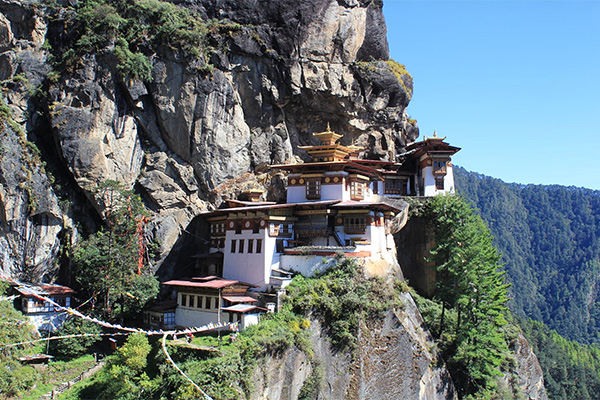
Morning Pilgrimage to Taktsang Monastery After breakfast drive through Paro valley-one of the most beautiful valleys in Bhutan with its slate-roofed farmhouses, graceful willow trees and rushing glacial river beneath snow covered peaks. Take an excursion to Taktsang Monastery, also known as Tiger’s Nest, (one of the most sacred places in Bhutan due to its association with Guru Rinpoche). It is believed that Guru Rinpoche reputedly flew to Paro Taktsang cliff in the form of Guru Dorji Drolo, mounted on a flaming dakini-tigress in the 747 A.D., where he meditated and subdued evil spirits. You can take time and spend some time meditating.

Paro

Paro

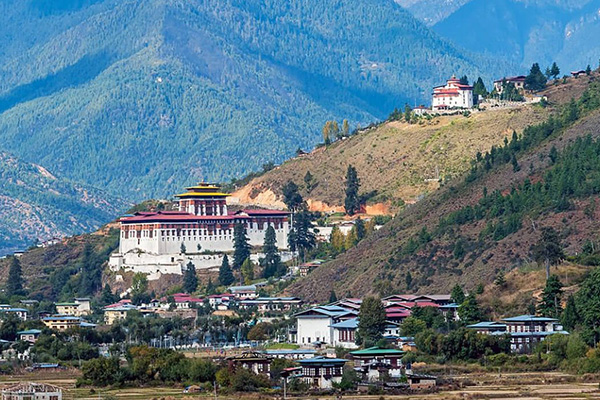
After morning yoga and then breakfast we would take you to few places: Jangtsa Dumgtseg Lhakhang is a Buddhist temple in Jangtsa, Paro. The temple is notable as it is in the form of a chorten which is very rare in Bhutan. It is located on the edge of a hill between the Paro valley and the Dopchari valley, across the bridge from Paro. The Buddhist iconography depicted in the Chorten is considered a unique repository of the Drukpa Kagyu school. According to a local legend, the Lhakhang was built by the saint Thangtong Gyalpo to subdue a "serpentine force" that was located at the foundation of the chorten. Another legend says that Lhakhang was built on the head of a demoness. According to a Bhutanese source it was built "on the nose of a hill that loos like a frog in order to counteract Sadag (earth-owning spirit) and Lunyen (powerful naga spirit). It is said that the hill, by which the temple is built, is a black vicious snake moving downwards We will drive to Farm house, we would enjoy the activates depending on your interest, you can try your hand in preparing the Bhutanese dish and then wear traditional dress to have the feeling of being Bhutanese. You can also try Hot stone bath Its good for your body. It is interesting to note that one of the ancient names of Bhutan is Menjung, which means “The Land of Medicinal Herbs”. The history of medicine in Bhutan dates back to Tibet in the 7th century, and has borrowed heavily from Indian Ayurvedic practices. Bhutanese hot baths are not like the other hot baths around the world. It uses Menchu, which means medicinal water. Menchu consists of fresh water and Artemisia absinthium (wormwood) leaves. The combination is heated with river stones that have been roasted over a fire until they are burning hot. To increase the temperature of the water, more heated stones are added into the main tub through a chute.

 Depart Bhutan

Depart Bhutan

After breakfast an early morning transfer to Paro Airport for your onward flight. Thank you for joining us in Bhutan for this special Mindful Yoga & Mindfulness Meditation Retreat

logo