Overview
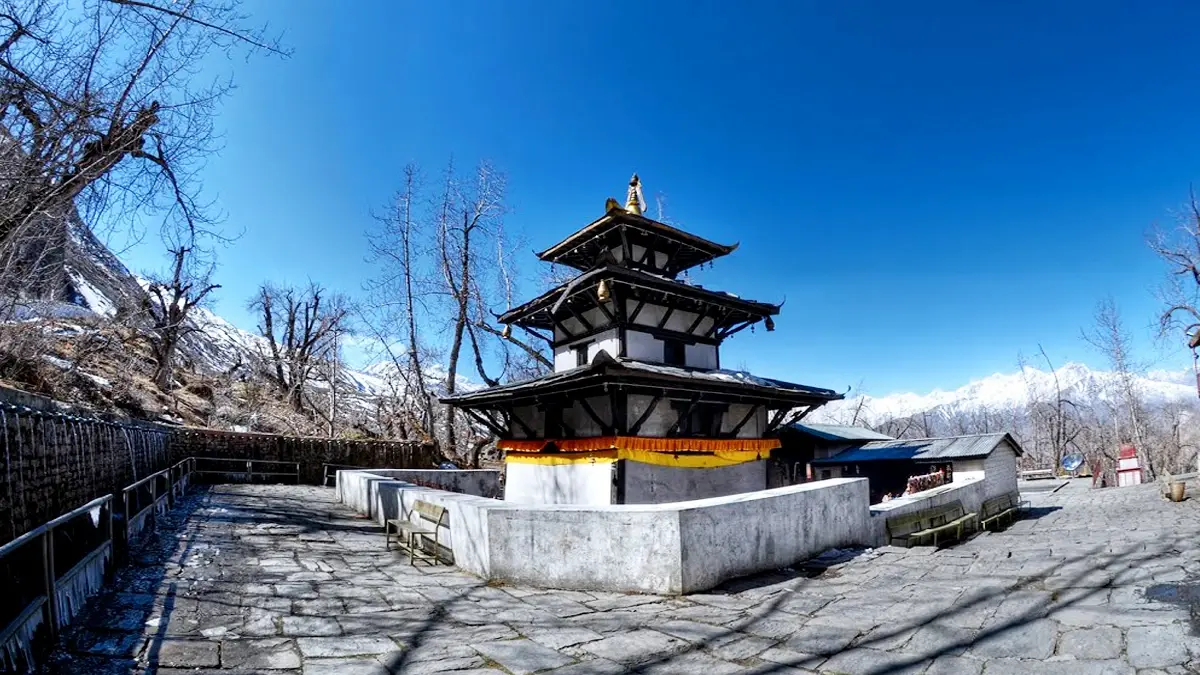
Muktinath is a Vishnu temple, sacred to both Hindus and Buddhists. It is located in Muktinath Valley at the foot of the Thorong La mountain pass in Mustang, Nepal. It is one of the world’s highest temples (altitude 3,800 m). The site is close to the village of Ranipauwa, which is sometimes mistakenly called Muktinath. Within Hinduism, it is known as Mukti Kshetra, which means the ‘place of liberation’. The central shrine of Sri Muktinath is considered by Hindu Vaishnavas to be one of the eight most sacred shrines, known as Swayam Vakta Kshetras. The others are Srirangam, Srimushnam, Tirupati, Naimisharanya, Thotadri, Pushkar, and Badrinath. The temple is small. The Murti is gold and the size of a man. The Parakram (outer courtyard) has 108 bull faces through which water is poured. The sacred water that flows in 108 pipes around the temple complex denotes the sacred Pushkarini waters (Temple Tanks) from the 108 Sri Vaishnava Divya Desam, where devotees take their sacred bath even in freezing temperatures. Worship is conducted by Buddhists, with a Buddhist monk present. A local nun manages the pujas (prayer rituals) in the temple. Pilgrims are expected to offer a Prasad (religious offering of food) to the deity. Pilgrims take back the Shaligram from the Gandaki River along with them as blessings.